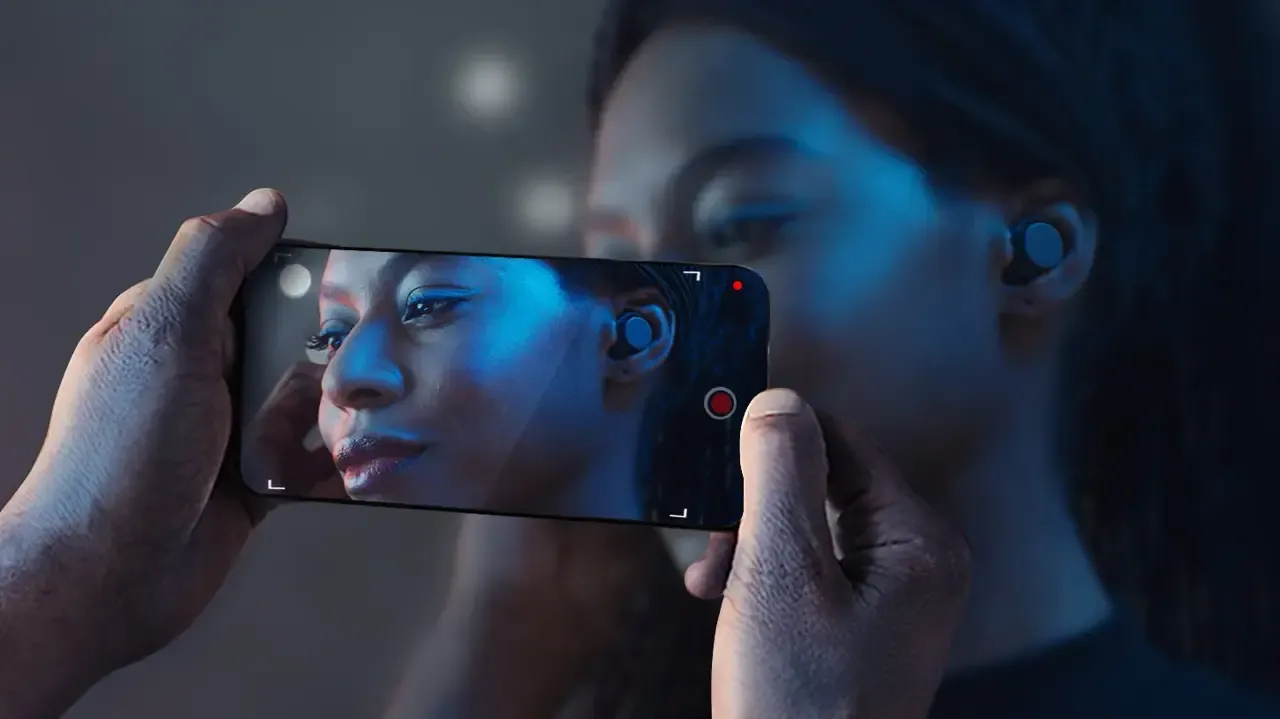



ams OSRAM launches imaging-to-display sensing answer for smartphones that redefines next-generation cellular visible experiences
ams OSRAM introduced right now ams OSRAM imaging-to-display sensing options for smartphones On the 2026 China Worldwide Optoelectronics Expo (CIOE 2026). answer integrates Ams Osram‘s newest technology sensing know-how helps smartphones enhance accuracy, stability, and accuracy in ambient gentle detection, picture seize, and spatial sensing. Connecting sensing applied sciences all through the imaging-to-display pipeline allows cellular units to ship true-to-life visible experiences.
This newly launched answer integrates an ams OSRAM spectral colour sensor, a multichannel spectral sensor for ambient gentle spectrum and flicker detection, and a direct time-of-flight (dToF) sensor. ams OSRAM has partnered with to develop the answer. in vivo to carry it to market. This marks the primary time that entrance under-display optical sensing and rear spatial sensing have been mixed to create an built-in sensing chain that spans ambient gentle detection, picture seize, and spatial understanding. This opens new utility situations and innovation potentialities in optical sensing for cellular units.
key sensor
ams OSRAM’s imaging-to-display sensing options for smartphones combine ams OSRAM’s newest technology sensing know-how.
Spectral colour sensor behind OLED:
Designed by ams OSRAM for spectral and colour sensing behind OLED shows, this sensor helps 5-channel spectral or RGB colour sensing. Excessive sensitivity and excessive signal-to-noise ratio work with ultra-low transmission OLED shows to precisely measure ambient gentle even in darkish environments, providing you with fine-grained management over display screen brightness, colour temperature, and colour administration. The sensor additionally options infrared suppression, proximity detection, and superior environmental adaptability, permitting smartphones to dynamically optimize show efficiency in response to adjustments in ambient gentle, delivering a extra pure, comfy, and lifelike visible expertise on bezel-less units.
Multi-channel spectral sensor for detecting ambient gentle spectrum and flicker:
ams OSRAM’s newly launched multichannel spectral sensor combines high-precision colour and spectral sensing, gentle supply identification, and flicker detection. The 8-channel model, designed for smartphone rear cameras, emulates human colour notion and gives correct ambient gentle information for computerized white steadiness, computerized publicity, and anti-flicker processing. Excessive sensitivity, impartial channel acquire, and steady HDR flicker measurement can rapidly determine gentle sources and detect flicker underneath advanced lighting, low-light, and excessive dynamic vary situations, bettering colour copy and stability in pictures and movies. The chip additionally contains optical calibration information to compensate for device-to-device variations and simplify calibration on the smartphone manufacturing line.
Direct time-of-flight (dToF) sensor TMF8829:
ams OSRAM’s newest technology 48×32 multi-zone dToF depth sensor is now obtainable in smartphones for the primary time. With 80° diagonal area of view and assist for multi-zone configurations, it gives real-time multi-zone depth data and might precisely detect the gap and spatial location of objects. Full manufacturing facility calibration and compact design enhance autofocus and movement monitoring efficiency, assist purposes corresponding to portrait depth-of-field segmentation, 3D reconstruction, AR ranging, and spatial scanning, serving to smartphones evolve from merely “seeing” photos to “understanding” house.
This know-how answer permits smartphone producers to ship a constant visible expertise that’s unaffected by altering ambient gentle situations. Customers can get pleasure from a snug, natural-looking show, in addition to constant and lifelike picture and video seize, whether or not open air in vivid daylight, indoors underneath advanced lighting, or in low-light environments at night time.
Why optical sensing is essential
Because the smartphone expertise turns into extra sensing-driven, optical sensing is rising as a key enabler of each show and imaging advances. Enhancing the visible expertise on smartphones requires greater than subtle algorithms and post-processing. It additionally depends on highly effective front-end capabilities for ambient sensing, spectral understanding, and spatial consciousness. Optical sensing is subsequently evolving past fundamental ambient gentle detection to seize a wider vary of knowledge corresponding to environmental spectrum, colour temperature, illuminance, gentle supply flicker, and spatial depth. This permits smartphones to transcend simply “seeing” their environment to “understanding” gentle and house, laying the sensing basis for next-generation show and imaging experiences.
Partnerships and demonstrations
Collaborate with companions to form the following technology of cellular visible experiences
At this 12 months’s CIOE, ams OSRAM in vivo We’ll exhibit a smartphone geared up with a high-precision VUS multispectral sensor utilizing ams OSRAM’s built-in imaging and show know-how answer. The demonstration highlighted three key utility areas: show brightness optimization, picture enhancement underneath advanced lighting and background situations, and real-time depth sensing.
By means of a side-by-side comparability and interactive expertise, guests had been in a position to straight observe the advantages of a extra pure and cozy display screen show underneath numerous ambient lighting situations, extra secure and real looking imaging efficiency in harsh lighting or flicker-prone environments, and enhanced autofocus and spatial consciousness enabled by depth data. Collectively, these three applied sciences create a seamless end-to-end chain from ambient gentle sensing and picture seize to spatial understanding and display screen rendering, vividly demonstrating the following technology of smartphone visible experiences the place “what you see is what you get.”
Because the world’s main smartphone model, in vivo has lengthy targeted on cellular imaging and show experiences, constructing deep experience in understanding end-user wants, integrating system-level applied sciences, and tailoring the general gadget expertise. Leveraging vivo’s strengths in defining smartphone know-how and shaping person experiences, ams OSRAM and vivo collaborated in the course of the improvement of this answer to determine an end-to-end know-how chain spanning ambient gentle sensing, picture seize, spatial understanding, and show rendering. The 2 corporations are working collectively to assist translate superior sensing capabilities on the part stage into user-visible experiences on smartphones.
The units on show not solely exhibit the worth of ams OSRAM’s imaging-to-display sensing options, but in addition replicate vivo’s forward-looking imaginative and prescient and continued exploration of next-generation smartphone visible experiences, opening up additional potentialities for the built-in evolution of show, imaging, and spatial sensing.
outlook
Going ahead, as smartphones proceed to evolve within the areas of imaging, show, AI, and spatial computing, optical sensing will change into an more and more essential pressure driving each device-level expertise upgrades and industry-wide technological developments. ams OSRAM continues to leverage its technological strengths in optics, sensing, and methods integration to drive innovation and real-world purposes in smartphone show and imaging know-how.
With a continued dedication to open collaboration, the corporate will additional strengthen its partnerships with gadget producers and ecosystem companions around the globe, working collectively to advance cutting-edge applied sciences, develop new utility alternatives, and create lasting worth for the {industry} and customers.