


House Assistant 2026.6! 🎉
I’m going to place my hand up straight away: ✋ I’m not a dashboard individual. Not as a result of I don’t like them; I really like seeing what you all construct. However designing a lovely one is a form of visible creativity I simply don’t have. That’s a giant a part of why I really like the built-in House dashboard a lot, it does the designing for me. However once I do construct a customized dashboard, I normally stare at that “add a card” dialog for approach too lengthy, choosing playing cards virtually at random simply to see if they appear good with the information I’ve.
So you may think about my pleasure for my private favourite of this launch: the new card picker. As a substitute of asking “which card sort do I would like?”, it now asks “which factor in your house do you wish to present?”, after which suggests playing cards that really make sense for it, with dwell previews utilizing your individual information. For somebody like me, that’s not simply
simpler; it’s genuinely inspiring. It nudges me in direction of combos I might not have considered by myself. 💡
This suits into a much bigger course I hold getting extra enthusiastic about: House Assistant getting higher at ranging from the factor you wish to do, as an alternative of asking you to first be taught the constructing blocks. The identical thought is what makes purpose-specific triggers and conditions in House Assistant Labs really feel so proper, and this launch brings them a giant step nearer to graduating out of Labs with model new zone triggers and situations. 📍
An in depth second favourite for me this launch is every part occurring round that within the automation editor: live test indicators on your conditions, target counts on every device, area, floor, and label, and proper notes you can attach to any step. Individually they’re small quality-of-life touches; collectively, they make constructing automations really feel a complete lot extra clear. ✨
And there’s loads extra to like on this launch: new tile card options, Z-Wave good locks catching up with their Matter siblings, a friendlier Apps web page, and one other huge batch of recent integrations from our group. 🚀
Benefit from the launch!
../Frenck
An enormous thanks to all of the contributors who made this launch potential! And a particular shout-out to @piitaya who helped write the discharge notes this launch. Additionally, @karwosts, @lexpostma, and @Petro31 for placing effort into tweaking its contents. Because of them, these launch notes are in nice form. ❤️
A friendlier approach so as to add playing cards to your dashboard
Including a card to a dashboard is a type of moments the place House Assistant has traditionally requested plenty of you. The previous dialog opened on a wall of card varieties, all named after the constructing blocks we use below the hood: tile, entities, button, gauge, look, image, markdown, and so forth. Pretty if you happen to already know what every one does. Loads much less pretty if you happen to got here in pondering “I simply need my front room mild on this dashboard.” 💡
Consumer analysis saved telling us the identical factor: folks open the editor with a machineA tool is a mannequin representing a bodily or logical unit that comprises entities. or an entityAn entity represents a sensor, actor, or perform in House Assistant. Entities are used to observe bodily properties or to regulate different entities. An entity is normally a part of a tool or a service. [Learn more] in mind, not a card type. So we flipped the dialog around.
When you add a card now, the dialog opens on a new By entity tab. On the left, your home: a tree of floorsA floor in Home Assistant is a logical grouping of areas that are meant to match the physical floors in your home. Devices & entities are not assigned to floors but to areas. Floors can be used in automations and scripts as a target for actions. For example, to turn off all the lights on the downstairs floor when you go to bed. [Learn more], areasAn area in Home Assistant is a logical grouping of devices and entities that represents a room or space in your home, such as the living room, kitchen, or garage. [Learn more], devices, and entities, the same shape some of you may recognize from the new purpose-specific triggers and conditions currently in Settings > System > Labs. Something that doesn’t match cleanly into your areas reveals up below Unassigned, so nothing will get misplaced. Search jumps straight to a flat consequence record.
Choose an entity, and the appropriate facet fills with dwell previews of playing cards that really match it, not a generic record:
- For a mild, you get a plain tile, a tile with a brightness slider, a toggle tile, coloration temperature, and favourite colours.
- For a cowl, open/shut, a place slider, and tilt.
- For a media participant, a tile with playback controls or with the quantity slider.
- For a numeric sensor like temperature, humidity, or energy, a development graph tile so you may see historical past at a look.
- For a calendar or to-do record, the matching devoted card.
- And a Browse all playing cards choice in case none of these is what you needed; the acquainted By card tab remains to be there too, unchanged.
Each suggestion renders as an actual preview of how the cardboard will look in your dashboard, along with your information, earlier than you choose it. No extra “add it, see the way it seems to be, delete it, strive the following one.”
Customized playing cards can be part of the social gathering too. If a customized card you’ve gotten put in has opted in to the brand new picker, its options present up below a separate Neighborhood part, proper under the built-in ones. Assist is determined by the customized card’s writer including it.
On cell, the identical dialog turns right into a two-step stream: choose your entity, then choose your card.
That is the primary seen step of a broader effort on the Open Home Foundation roadmap to make constructing a dashboard really feel as pure as constructing an automation: begin from what you wish to management, and let House Assistant counsel the remainder. Count on extra on this course within the releases to come back.
Keep a customized card? You may choose in to the brand new picker by including a getEntitySuggestion perform to your window.customCards entry. The developer weblog submit Custom card suggestions in the card picker walks by means of the small print.
Infrared now additionally listens
In this release, it does.
The Infrared platform gains a new receiver event entityAn event entity represents a momentary occurrence without a lasting state, for example, when you press a doorbell or a button on a remote control. Instead of a state such as on or off, the event entity keeps track of when the last event was detected and its event type, such as a single press or a long press. [Learn more]. Any transmitter integration that supports it can expose the IR commands it picks up as events in Home Assistant, ready to drive automations just like any other event trigger. ESPHome is the first transmitter integration on board, so any ESPHome device with an IR receiver wired up can now act as an IR listener for your whole house. On the device side, LG Infrared is the first device integration to use it, exposing the commands its receiver sees as events you can react to.
This means you can keep Home Assistant in sync with the original remote: use the remote that came with the device, and Home Assistant sees it happen instead of being left in the dark with stale state. It also opens the door for future integrations to do more with what they hear, like turning a spare IR remote into a Home Assistant controller.
This is the second half of the infrared story we started two releases ago, making infrared a true two-way platform in Home Assistant. It also closes out the Open Home Foundation roadmap opportunity that got down to make infrared a two-way platform in House Assistant.
Sharpening the automation editor
Purpose-specific triggers and conditions
The Labs preview keeps growing, both in capabilities and polish. This release picks up where last month left off: the cross-domain successors to the old Person and Device Tracker home triggers and conditions have landed, this time built around zones. 📍
Four new zone triggers and four new zone conditions cover the same ground the removed entered_home, left_home, is_home, and is_not_home building blocks did, but in a more flexible way:
- Triggers to react when a person or device trackerDevice trackers are used to track the presence, or location, of a device. [Learn more] enters or leaves a zoneZones allow you to specify certain regions on a map. They enable zone presence-detection and can be used in automations. For example, to start the vacuum after you left home or start the heating at home when you leave the office. [Learn more], and when a zone becomes occupied or empty.
- Conditions to check whether a person or device tracker is in or not in a zone, or whether a zone is currently occupied or not.
You’re no longer limited to your home zone: any zone you’ve defined works, so reacting to someone arriving at work, school, or the gym is just as straightforward. Both triggers and conditions support the for duration field added last release, so you can wait until someone has actually settled in (or out) before doing anything.
We’ve also been busy giving the existing triggers and conditions the documentation they deserve. About half of the purpose-specific triggers and conditions now have their own dedicated reference page over at triggers and conditions, with examples, options, and the small details that make a real difference when you are wiring things up. The rest are on their way.
Haven’t tried them yet? Now is a great time. Enable the feature at Settings > System > Labs, give it a spin, and tell us what you assume. The extra suggestions we gather, the earlier we are able to graduate this out of Labs.
See precisely what number of issues an automation targets
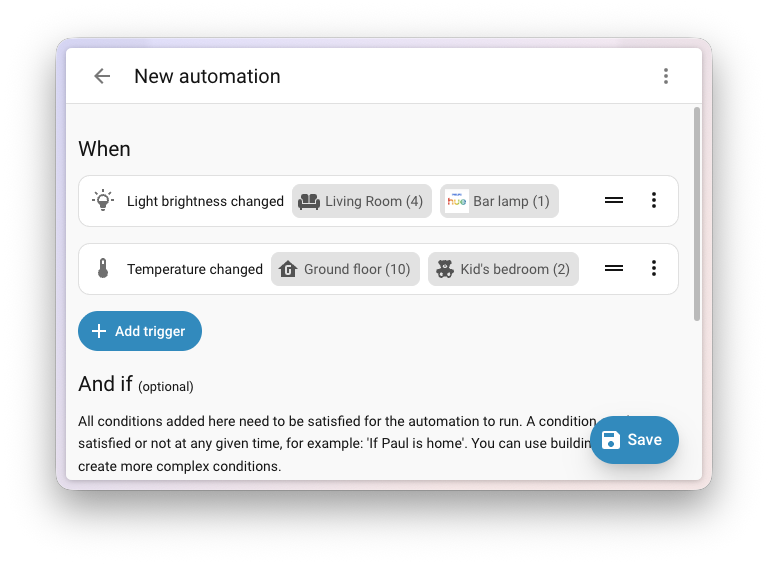
If you construct an automationAutomations in House Assistant help you mechanically reply to issues that occur in and round your property. [Learn more] that acts on a floorA floor in Home Assistant is a logical grouping of areas that are meant to match the physical floors in your home. Devices & entities are not assigned to floors but to areas. Floors can be used in automations and scripts as a target for actions. For example, to turn off all the lights on the downstairs floor when you go to bed. [Learn more], an areaAn area in Home Assistant is a logical grouping of devices and entities that represents a room or space in your home, such as the living room, kitchen, or garage. [Learn more], a labelLabels in Home Assistant allow grouping elements irrespective of their physical location or type. Labels can be assigned to areas, devices, entities, automations, scenes, scripts, and helpers. Labels can be used in automations and scripts as a target for actions. Labels can also be used to filter data. [Learn more], or a device, the editor used to just show the name of that target. So “Bedrooms” could mean three lights, or thirty, with no way to tell at a glance.
Now every floor, area, device, and label pill in your automation rows shows the number of entities it expands to, right next to its name. If your target selector also filters by domain or device class, the count reflects that filter, so what you see is what the action will actually touch. Select the pill for a quick peek at exactly which entities are included.
It is the kind of small detail that turns “I hope this only hits the right lights” into “yep, twelve, that’s correct”, especially handy as your home grows or you start using labels across rooms.
See at a glance which conditions pass
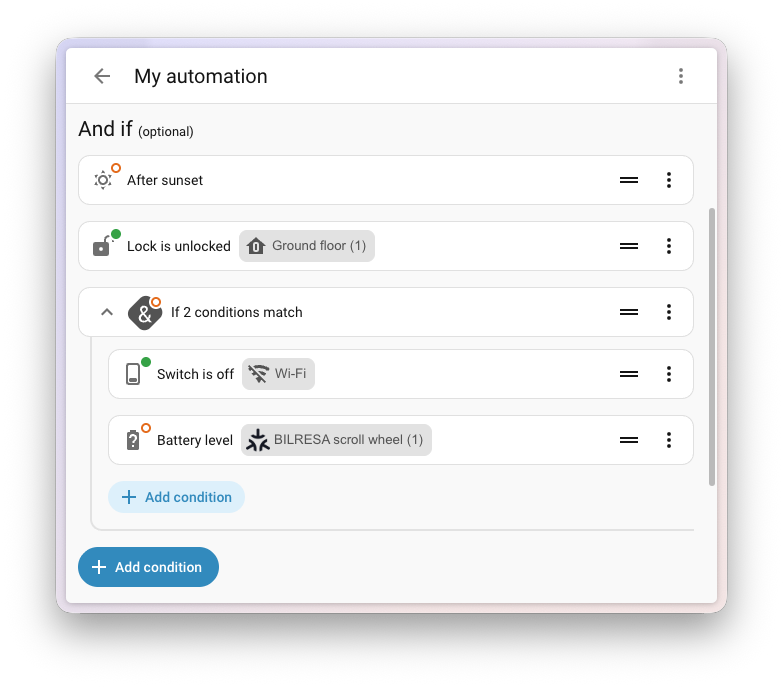
Conditions are the gatekeepers of your automations. They decide whether something runs or not, and when an automation doesn’t fire the way you expected, the first question is usually: “which condition was actually blocking it?” Until now, finding out meant testing each condition one by one, or waiting for the next run and digging through the trace afterwards.
The automation editor now tells you right there, while you are editing. Every condition row shows a small live test indicator as a badge on its icon that updates in real time as your home changes:
- A green check when the condition currently passes
- A red circle when it doesn’t
- A neutral state when the condition is incomplete or can’t be evaluated yet
- A clear error indicator, with the full message in a tooltip, when the configuration is invalid
Hover the icon to see exactly what the condition is reporting. Edit the condition, and the badge updates immediately, so you can dial in thresholds, zones, or state matches and see the result without leaving the editor. The same indicators also show up on dashboard visibility conditions, so the cards you hide or show conditionally tell you the same story.
This is part of a broader roadmap effort to bring home context into the automation editor: surfacing the knowledge it’s essential to construct and debug automations proper the place you might be engaged on them.
Add notes to any step in your automation
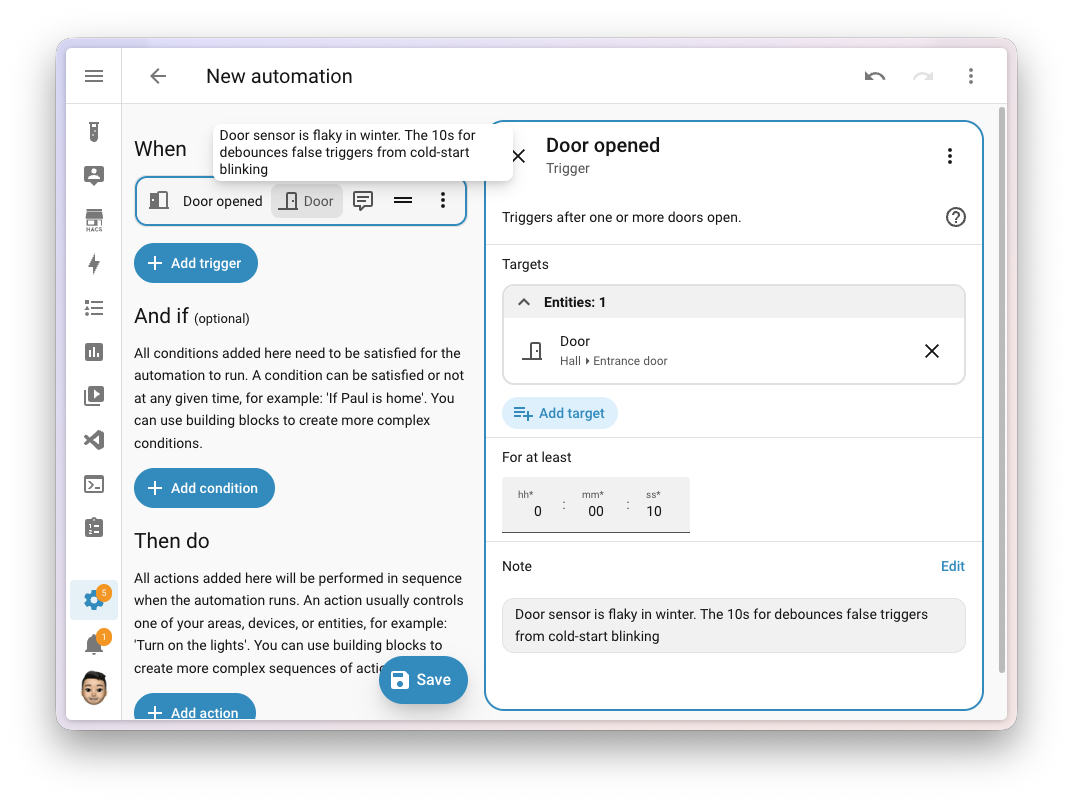
Aliases are nice for renaming a set off or motion, however they’ve all the time been a single line, they usually double because the label you see within the row. So if you happen to needed to elucidate why a step exists (“the porch sensor typically triggers by itself in winter, so this waits just a few seconds to ensure”), you have been out of luck with out dropping into YAML.
Each set offA set off is the a part of an automation that makes the automation run when a selected change occurs, for instance, when the solar units or a door opens. [Learn more], conditionConditions check whether something is true at that moment, for example, whether a door is closed. You can use them in automations and scripts. If a condition is not met, the actions that come after it in the same sequence do not run. At the top level of an automation or script, this stops the automation or script. [Learn more], actionAn action makes Home Assistant do something, for example, turn on a light, send a notification, or activate a scene. Automations and scripts run a list of actions. [Learn more], option, and scriptA script is a saved list of steps that runs when you start it, for example, from a dashboard, with Assist, or from an automation. Unlike an automation, a script has no triggers, so it doesn’t start by itself. [Learn more] field now has a dedicated Notes field, separate from its name. Open the step’s sidebar, jot down whatever future-you needs to know, and it stays with that step forever. We deliberately called it notes and not comments to keep it clear from YAML comments, which are a different thing entirely.
Notes travel with the automation when you duplicate, export, or share it as a blueprintA blueprint is a script, automation, or template entity configuration with certain parts marked as configurable. This allows you to create multiple scripts, automations, or template entities based on the same blueprint, with each having its own configuration-specific settings. Blueprints are shared by the community on the blueprints exchange within the discussion board. [Learn more], so the reasoning behind a setup is now not one thing solely the unique writer remembers.
Tile card options
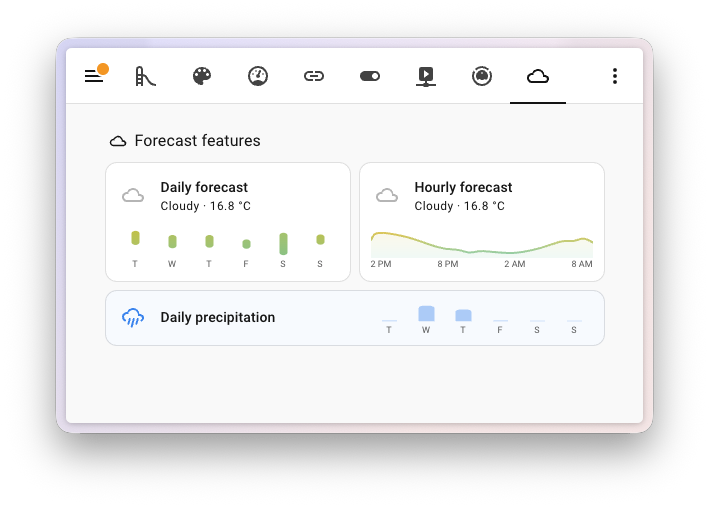
Your forecast, right where you check the weather
Most of us already have a weather tile sitting somewhere on a dashboard. Up until now, the moment you wanted to know what tomorrow looks like, you had to open the more info dialog, jump to a different card, or build a whole forecast section just for that. No more.
Two new tile card features put the forecast directly onto your existing weather tile:
- Temperature forecast draws a bar chart of high and low temperatures for the days ahead, colored from cool cyan to deep red so you can read the week at a glance. In the hourly view, it renders as a smooth filled curve.
- Precipitation forecast shows how much rain (or snow) is expected for each slot, or, when your weather service only provides it, the chance of precipitation.
Both features automatically pick the best forecast resolution your weather service offers (daily, twice-daily, or hourly), and you can pin a specific resolution or toggle the day and hour labels from the card editor. One small change, big difference: your dashboard now answers the next question before you ask it.
Turning the media player tile into a real remote
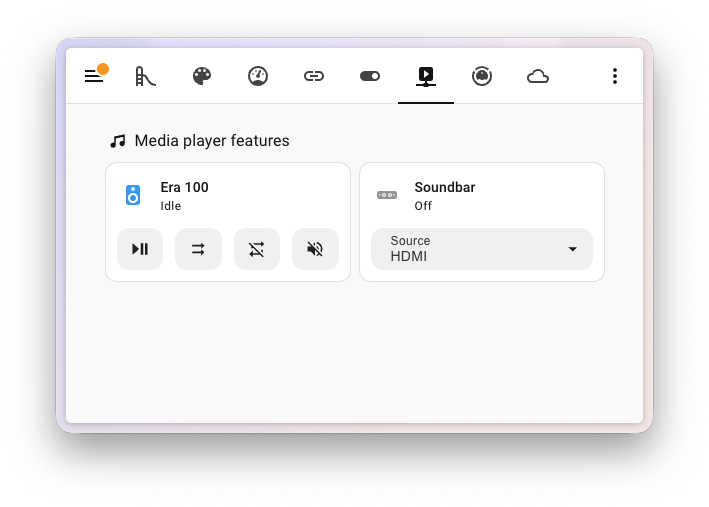
This release fills in those last gaps. Across the media player tile card features, you now have:
- A Mute button on both the Volume slider and Volume buttons features, so you can silence the room straight from the tile.
- Shuffle, Repeat, Volume up, Volume down, and Mute as extra controls you can mix into the Playback feature, alongside the existing transport buttons.
- A filter for the Source and Sound mode dropdowns, so a receiver that reports two dozen inputs only shows the three you actually use.
The result: a single tile that looks like, and acts like, a remote built specifically for that device. No more “almost right” tiles, no more falling back to the more info dialog for that one button you really need. Your Music Assistant setup goes to really feel proper at residence. Thanks, @pcan08 and @MindFreeze!
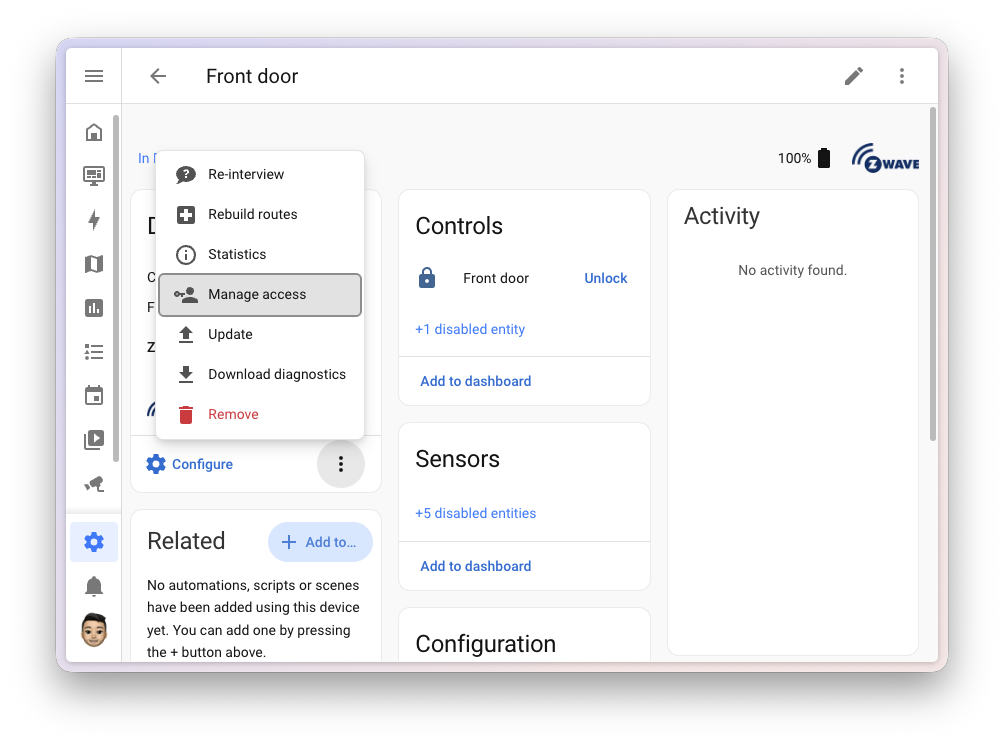
Z-Wave good lock credential administration
Open your lock from the device page and select Manage access from the
There is one small difference with the Matter version that plays to Z-Wave’s strengths: both PIN codes and passwords are supported, where the lock supports them. PIN codes are limited to digits (the familiar keypad experience), while passwords accept the full character set for locks with an alphanumeric keypad.
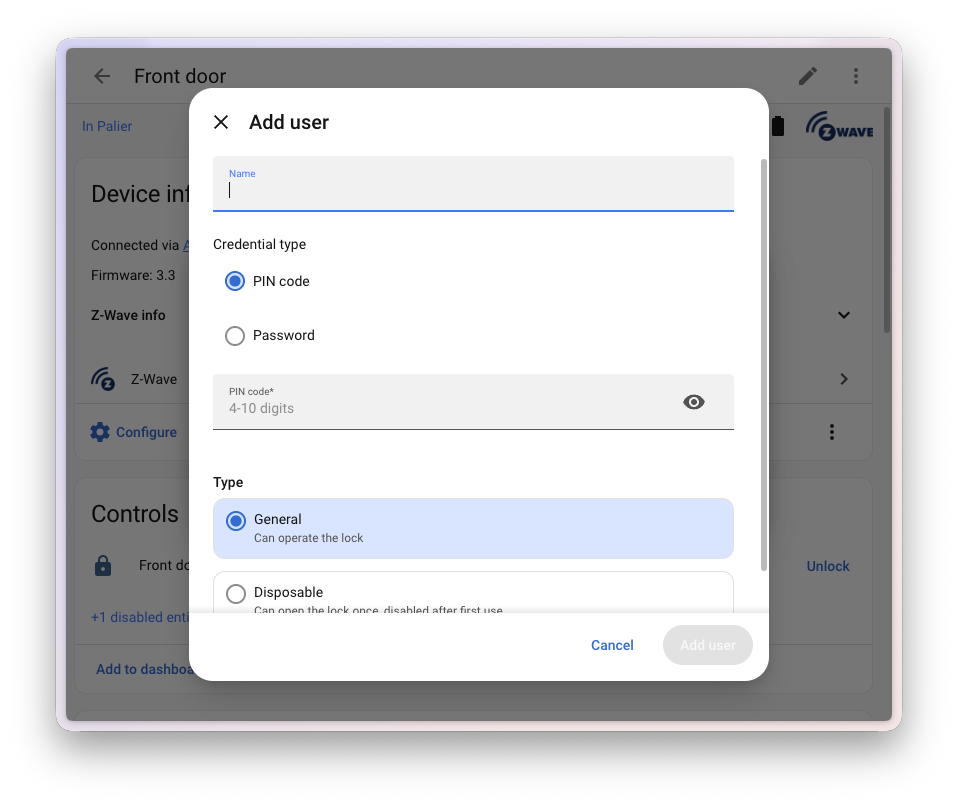
Just like the Matter equivalent, every action behind the dialog is also available as a regular Home Assistant actionAn action makes Home Assistant do something, for example, turn on a light, send a notification, or activate a scene. Automations and scripts run a list of actions. [Learn more]. That means you can hand out a one-time PIN to a guest from an automation, rotate codes on a schedule, or wipe a lost user with a single button press on your dashboard.
A fresh look for the Apps page
This release gives the Apps page a friendlier, more modern look. Every installed app is shown as its own card with its icon, name, a short description, and a clear indicator of whether it is running, so you can spot the state of your apps at a glance.
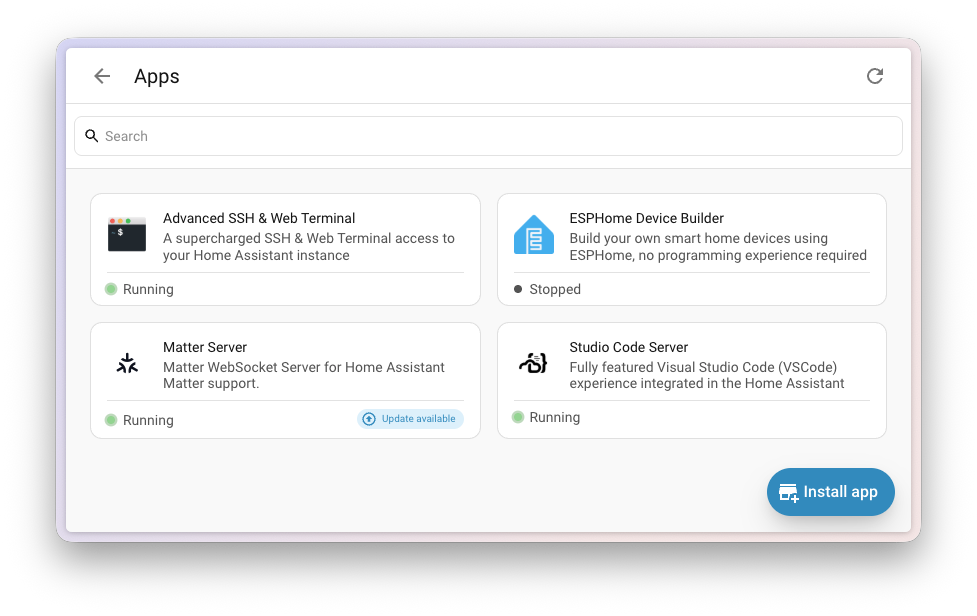
Installed apps can now also carry small tags that highlight what they are, making it easier to scan your list and find what you are looking for. The app detail page got the same care, with a cleaner layout that also works well on a tablet.
Integrations
Thanks to our community for keeping pace with the new integrationsIntegrations connect and integrate Home Assistant with your devices, services, and more. [Learn more] and improvements to existing ones! You’re all awesome 🥰
New integrations
We welcome the following new integrations in this release:
-
AiDot, added by @s1eedz
Management your AiDot Wi-Fi good lights, together with A19 and BR30 bulbs, immediately from House Assistant. Communication occurs regionally over your community, so no cloud connection is required. -
CentriConnect/MyPropane, added by @gresrun
Regulate your propane tank from House Assistant. The mixing connects to the centriconnect.com cloud service to reveal the extent and standing of tanks outfitted with a MyPropane monitor, excellent for getting a notification earlier than you run out. -
Cielo House, added by @ihsan-cielo
Management your Cielo good air conditioner and warmth pump controllers from House Assistant, contributed by Cielo themselves. Connects by means of the Cielo Join cloud API and exposes every machine as a local weather entity, so you may regulate modes and temperatures alongside the remainder of your property automations. -
Knowledge Grand Lyon, added by @Crocmagnon — launching at 🏆 platinum high quality
Convey open information from town of Lyon, France, into House Assistant. Observe upcoming departure instances at TCL public transit stops, and monitor real-time bike and dock availability at Vélo’v bike-sharing stations. -
Guntamatic, added by @JensTimmerman — launching at 🥈 silver high quality
Monitor your Guntamatic wooden or pellet heater regionally from House Assistant. The mixing reads sensor information immediately from the heater’s net interface over your native community, with no cloud account wanted. -
LG TV through Serial, added by @balloob — launching at 🥈 silver high quality
Management your LG TV regionally from House Assistant over its built-in RS-232 serial port. Works by means of a direct serial cable, a USB-to-serial adapter, or an ESPHome-based serial proxy, supplying you with a dependable connection that even works whereas the TV is in standby. Nice for older units with out good options and for industrial signage shows. -
Marantz Infrared, added by @balloob — launching at 🥈 silver high quality
Management your Marantz amplifier with any infrared transmitter you have already got arrange in House Assistant. Constructed on high of the Infrared entity platform, so you may pair it with an ESPHome machine with an IR LED, or some other supported IR emitter, and function your amplifier with out relying on the community or cloud. -
Mitsubishi Consolation, added by @nikolairahimi
Convey Mitsubishi Electrical ductless minisplit warmth pump and air con programs into House Assistant. The mixing talks immediately to every indoor unit over your native community for low-latency management, and solely makes use of the Kumo Cloud account for the preliminary machine discovery and credential retrieval. Kumo Station outside models are supported for temperature monitoring. -
Ouman EH-800, added by @Markus98
Join your Ouman EH-800 heating controller to House Assistant. Monitor and management your heating system regionally with local weather, quantity, choose, sensor, and valve entities, excellent for automating your property’s warmth distribution. -
OVHcloud AI Endpoints, added by @Crocmagnon
Add a dialog agent powered by OVHcloud AI Endpoints to House Assistant. Choose from a curated catalog of open-weight giant language fashions hosted in Europe, and use them with Help to regulate your property and reply questions. -
PAJ GPS, added by @skipperro
Observe the placement of your PAJ GPS gadgets on the map in House Assistant. The mixing creates a tool tracker entity for every tracker in your PAJ account, so you may construct automations round their location, like notifications when a tracker arrives residence or leaves a zone. -
PTDevices, added by @frogman85978
Monitor your PTLevel water stage sensors in House Assistant. Get notifications when tanks run low or are getting used unexpectedly, and construct automations to show off pumps when ranges drop or run home equipment as soon as water has been delivered. -
Samsung Infrared, added by @lmaertin
Management your Samsung TV with any infrared transmitter you have already got arrange in House Assistant. Just like the Marantz Infrared integration, it builds on the Infrared entity platform, so you should utilize an ESPHome machine with an IR LED, or some other supported IR emitter, to function your TV. -
Vistapool, added by @fdebrus
Monitor and management your Hayward-branded pool controllers from House Assistant, together with AquaRite, Vistapool, Sugar Valley, Poolwatch, Kripsol, and Dagen gadgets. The mixing makes use of the official Hayward cloud API with real-time push updates, so modifications present up immediately with out polling. -
Xthings Cloud, added by @zhangluofeng
Management your Xthings good residence gadgets, beginning with the U-tec Shiny A19 Coloration good mild bulb, by means of the Xthings Cloud service. Contributed by Xthings themselves, with real-time standing updates delivered over WebSocket push, so the state in House Assistant stays in sync with what’s occurring in your gadgets. -
Yoto, added by @piitaya
Management your Yoto audio gamers from House Assistant. Play and pause playing cards, change the quantity, skip and search tracks, and see what’s at present taking part in. The mixing connects to your Yoto account and receives dwell playback updates, so modifications that occur on the participant present up in House Assistant virtually instantly.
Noteworthy enhancements to present integrations
It’s not simply new integrationsIntegrations join and combine House Assistant along with your gadgets, providers, and extra. [Learn more] that have been added; existing ones are also being constantly improved. Here are some of the noteworthy changes to existing integrations:
- MQTT picked up two improvements: a new message expiry interval option, and subentry support extended to the date, datetime, and time entity platforms. Thanks, @jbouwh!
- Shelly now exposes an occupancy binary sensor. Thanks, @bieniu!
- Sonos received search, so now you can discover tracks, albums, and artists throughout your music providers straight from House Assistant. Thanks, @PeteRager!
- Reolink battery cameras can now join on to House Assistant, without having a Reolink House Hub or NVR as a bridge. Not all fashions and options are supported but; utilizing a House Hub or NVR stays the popular methodology. A battery digicam can’t be related each methods on the similar time. Thanks, @starkillerOG!
- Tuya obtained a wave of device-specific enhancements: quantity entities and fault codes for the Professional Breeze OmniDr dehumidifier, water-timer information factors and a countdown quantity for the sfkzq single-valve timers, extra entities for cameras, a quantity entity for the WG2 alarm panel (Duosmart C30), complete manufacturing sensor help for SPM02 gadgets, and help for the InverGo inverter pool warmth pump. Thanks, @peterlang-p, @mik-laj, @davidXire, @tbouron, @ChayoteJarocho, and @focabr!
- SwitchBot had an ideal launch with broad machine help: the Everlasting Out of doors Mild, Climate Station, and Lock Imaginative and prescient (Professional) / Lock Professional Wifi at the moment are supported, the Meter CO2 gained a show time offset quantity entity, and the Air Air purifier now exposes its LED settings. Thanks, @elgris, @Onero-testdev, and @zerzhang!
- SmartThings TVs now let you choose the enter supply, and Copper water meters expose their sensors. Thanks, @felipecrs and @joostlek!
- Alexa Units received two huge additions: a brand new media participant platform that exposes your Echo gadgets as media gamers, with playback, quantity, and mute controls, and a brand new occasion entity that surfaces the voice instructions your Echo hears so you may react to them in automations. Thanks, @jamesonuk and @chemelli74!
- Anthropic Claude conversations now help the online fetch device, permitting the mannequin to retrieve and motive about dwell net content material. Thanks, @Shulyaka!
-
Google Nest added a
nest.set_fan_timermotion, so you may script your thermostat’s fan timer proper from House Assistant. Thanks, @tronikos! - HomeWizard up to date charging methods with help for his or her new good charging characteristic, and two new battery group sensors: goal energy and group energy. Thanks, @DCSBL!
- UniFi Defend added an alarm profile choose entity, letting you turn between alarm profiles immediately from House Assistant. Thanks, @RaHehl!
- FRITZ!SmartHome now ships information descriptions for all configuration fields, making setup simpler to grasp. Thanks, @mib1185!
- Viessmann ViCare RadiatorActuator gadgets now expose a goal temperature sensor. Thanks, @lackas!
- Cambridge Audio receivers now expose a quantity restrict, so you may forestall overly loud playback. Thanks, @noahhusby!
- Nord Pool picked up a binary sensor for price-based automations. Thanks, @gjohansson-ST!
- YouTube channels now expose a video depend sensor. Thanks, @nathan-osman!
- OneDrive added a delete motion so you may clear up recordsdata out of your automations. Thanks, @leodrivera!
- WeatherFlow Cloud stations now expose devoted station-level sensors. Thanks, @jeeftor!
- Portainer continues to develop: new system well being and disk area coordinators, and recreate-container service actions. Thanks, @erwindouna!
- Ohme EV chargers received two new controls: a state of cost enter quantity and a photo voltaic increase swap. Thanks, @dan-r!
- Jewish Calendar now exposes a calendar entity, excellent for monitoring Jewish holidays and Shabbat in your dashboards and automations. Thanks, @tsvi!
- BleBox picked up a number of enhancements: a brand new replace platform that exposes put in and newest firmware variations and allows you to set off firmware updates straight from House Assistant, plus tilt-only mode and 180-degree tilt help for canopy and shutter entities. Thanks, @bkobus-bbx!
- PrusaLink 3D printers gained extra sensors: X/Y axis place, location, minimal extrusion temperature, plus SD prepared, farm mode, and connection standing binary sensors. Thanks, @heikkih!
- System Bridge gained a notify entity, so you may ship desktop notifications out of your automations. Thanks, @tr4nt0r!
- Indevolt battery help expanded considerably with new battery temperature, MOS temperature, fundamental MOS temperature, cycle depend, transformer temperature, and real-time management sensors. Thanks, @Xirt and @karlbeecken!
- Qube warmth pump added a water heater entity for home scorching water management (with a lift mode for utilizing surplus power), plus switches for summer time mode, anti-legionella cycle, heating curve, and heating demand. Thanks, @MattieGit!
- Eurotronic Comet Blue thermostats added a quantity platform exposing the eco and luxury setpoints and the temperature offset, so you may fine-tune your schedule with out leaving the dashboard. Thanks, @rikroe!
- Elk-M1 Management picked up devoted quantity entities for the Elk’s configurable settings (comparable to timers), beforehand buried inside a single sensor. Thanks, @gwww!
- Control4 now helps motorized window therapies by means of a brand new cowl platform. Thanks, @nayfield!
- IMGW-PIB added river vegetation cowl sensors for emergent, floating, and submerged vegetation. Disabled by default, so you may allow simply those you want. Thanks, @bieniu!
- Watts Imaginative and prescient + obtained HVAC motion and preset mode help, plus a brand new timer mode service. Thanks, @theobld-ww!
- Kiosker gained a swap to disable the screensaver, plus a set of buttons for frequent kiosk actions: navigate ahead, backward, and residential; clear cache and cookies; print; ping; and work together with the screensaver. Thanks, @Claeysson!
- V2C EV chargers now expose their LED lights. Thanks, @dgomes!
- Lunatone DALI lighting controllers now expose their machine standing as sensors. Thanks, @MoonDevLT!
- Satel Integra alarm zones now expose temperature sensors. Thanks, @Tommatheussen!
-
Template entities now help the machine tracker platform, supplying you with a contemporary alternative for the
device_tracker.seemotion that was deprecated final launch. Thanks, @Petro31!
Integration high quality scale achievements
One factor we’re extremely pleased with in House Assistant is our integration quality scale. This scale helps us and our contributors to ensure integrations are of high quality, maintainable, and provide the best possible user experience.
This release, we celebrate several integrationsIntegrations connect and integrate Home Assistant with your devices, services, and more. [Learn more] that have improved their quality scale:
-
4 integrations reached platinum 🏆
-
1 integration reached gold 🥇
-
1 integration reached silver 🥈
-
2 integrations reached bronze 🥉
This is a huge achievement for these integrations and their maintainers. The effort and dedication required to reach these quality levels is significant, as it involves extensive testing, documentation, error handling, and often complete rewrites of parts of the integration.
A big thank you to all the contributors involved! 👏
Now available to set up from the UI
While most integrationsIntegrations connect and integrate Home Assistant with your devices, services, and more. [Learn more] can be set up directly from the Home Assistant user interface, some were only available using YAML configuration. We keep moving more integrations to the UI, making them more accessible for everyone to set up and use.
The following integrations are now available via the Home Assistant UI:
Farewell to the following
The following integrationIntegrations connect and integrate Home Assistant with your devices, services, and more. [Learn more] is also no longer available as of this release:
- Konnected has been removed. The legacy Konnected.io integration was deprecated in Home Assistant 2025.10 and is now removed. To keep using your Konnected hardware, follow the migration guide from Konnected to flash your machine with ESPHome firmware.
Different noteworthy modifications
There are various extra enhancements on this launch; listed below are among the different noteworthy modifications:
- A friendlier setup for MatterMatter is an open-source commonplace that defines how one can management good residence gadgets on a Wi-Fi or Thread community. [Learn more] devices. When you add any Matter device, Home Assistant now asks you to name it and assign it to an area right away, so it is ready to use the way you intend from the first moment. For contact sensors and covers, you can also pick what the device is attached to (a door, window, garage door, or something else). On iOS, the pre-filled name and device class selection require an upcoming iOS app update; until then, the previous behavior is used.
- OpenThread Border Router 1.4 is out of beta. The OpenThread Border Router app now ships ThreadThread is a low-power mesh networking standard that is specifically designed for smart home applications. It is a protocol that defines how devices communicate. [Learn more] 1.4 by default, no beta toggle required. For now, this is mostly about bug fixes and stability, including the new built-in mDNS implementation from OpenThread, which should help resolve a class of stubborn Thread connectivity issues that previously traced back to mDNS quirks in some home routers. It also lays the groundwork for bringing the new Thread 1.4 features to Home Assistant in the near future.
- Sirens join the Matter integration. Matter sirens (like Heiman-style smoke detectors that double as a loud alarm) are now exposed as proper siren entitiesAn entity represents a sensor, actor, or function in Home Assistant. Entities are used to monitor physical properties or to control other entities. An entity is usually part of a device or a service. [Learn more] you can switch on and off from automations and dashboards. Thanks, @lboue! 🚨
- Bluetooth proxies at the moment are a lot friendlier to battery-powered gadgets. Till now, each Bluetooth scanner ran in energetic mode, always polling gadgets and waking up your battery-powered Bluetooth sensors and trackers extra typically than they should. Beginning this launch, the default for each the Bluetooth integration and ESPHome Bluetooth proxies is the brand new Auto mode, which switches to energetic scanning solely when an integration really wants it, and solely on one scanner at a time. The consequence: round 95–96% much less battery used for Bluetooth scanning, whereas every part retains working the way in which it did. The Bluetooth UI catches up too, labeling every adapter as Auto (energetic) or Auto (passive), and the machine information dialog gained a Uncooked commercial area for debugging. Extra on the default change within the backward-incompatible changes part.
- Firmware model within the gadgets desk. The Units web page will get a hidden-by-default Firmware column you may swap on from the desk choices, making it straightforward to verify whether or not a firmware replace really landed with out altering the default structure. Thanks, @markvp!
- A friendlier ZHA group web page. The ZHA group create and edit screens have been rebuilt round a compact, card-based structure that retains your gadgets and group settings seen collectively, as an alternative of 1 lengthy desk you needed to scroll by means of. Thanks, @jpbede!
- Search by label in additional locations. The information tables for helpersA helper is a digital entity you create inside House Assistant. It’s not backed by a bodily machine. Helpers retailer values, monitor state, or do calculations that your automations and dashboards want. [Learn more], automations, scenes, and scripts now allow you to filter by labelLabels in House Assistant permit grouping parts regardless of their bodily location or sort. Labels will be assigned to areas, gadgets, entities, automations, scenes, scripts, and helpers. Labels can be utilized in automations and scripts as a goal for actions. Labels can be used to filter information. [Learn more], matching the search bar that gadgets and entities already had. Thanks, @ildar170975!
- The backup encryption key’s tougher to overlook. House Assistant already creates a backupHouse Assistant has built-in performance to create recordsdata containing a duplicate of your configuration. This can be utilized to revive your House Assistant in addition to migrate to a brand new system. The backup characteristic is on the market for all set up varieties. [Learn more] mechanically earlier than each replace, however that backup is simply helpful if you happen to can nonetheless decrypt it. The Backup settings web page has been reorganized to place your encryption key entrance and heart, with a transparent reminder to reserve it someplace secure. Dropping that key is likely one of the most painful methods to lose entry to a backup, so we wish to be sure to don’t.
- Coloration customization for graph playing cards. The statistics graph card and historical past graph card now allow you to choose a customized coloration per entity, each from the visible editor and in YAML. Thanks, @ildar170975!
- Superior mode is gone. The Superior mode toggle in your consumer profile, and each characteristic that used to cover behind it, is now retired. We’ve been peeling away its gates launch by launch; this launch finishes the job. A single toggle was by no means an ideal match: it bundled unrelated options collectively and quietly advised some components of House Assistant have been just for “superior” customers. Neither is true. Every thing that used to dwell behind it’s now merely out there to everybody by default. Extra background within the Open Home Foundation roadmap.
A clearer view of your property’s power
Two quality-of-life upgrades land in the energy dashboard this release. ⚡
If you have a home battery, you can now hook up its state-of-charge sensor (the percentage one) right from Settings > Dashboards > Energy. As soon as it’s set, the Battery node on the power distribution card reveals the present cost stage alongside the power flowing out and in, and an identical battery badge seems on the high of the power panel so you may see at a look how full your battery is, with out leaving the dashboard. Thanks, @MindFreeze!
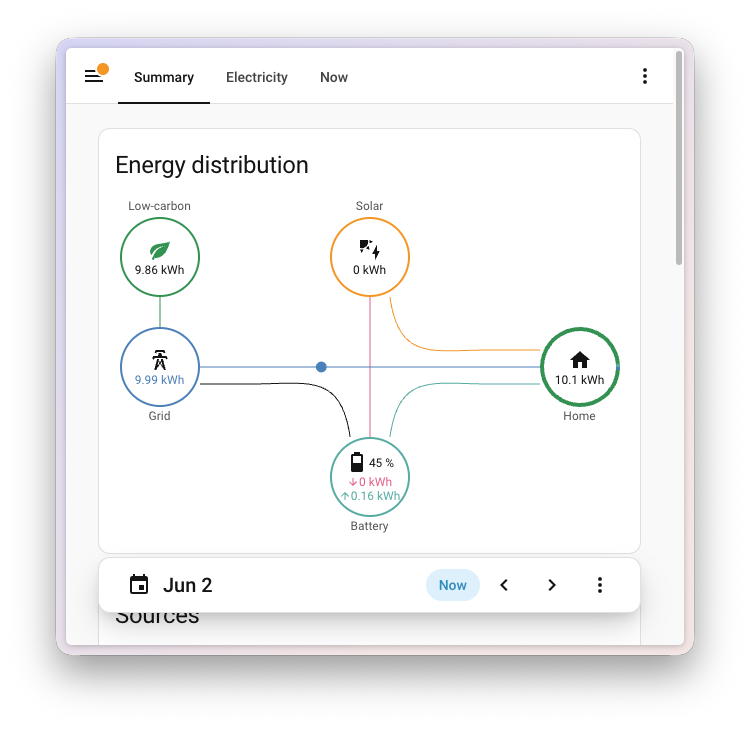
The opposite addition is small however long-requested: now you can give your grid, photo voltaic, battery, gasoline, and water sources a customized identify within the power configuration. So as an alternative of “Grid consumption” and “Grid return”, you may name them “Predominant meter” and “Photo voltaic export”, or no matter is smart on your residence. The names stream by means of to the playing cards, charts, and statistics, making multi-source setups (like a separate EV meter or a second water faucet) far simpler to inform aside. Thanks, @karwosts!
Fast hyperlinks between every part you care about
House Assistant is stuffed with issues which might be associated to one another: a tool has entities, these entities present up in automations and scripts, automations dwell in areas, areas have labels, and so forth. Getting from one to the following used to imply plenty of back-and-forth between settings pages.
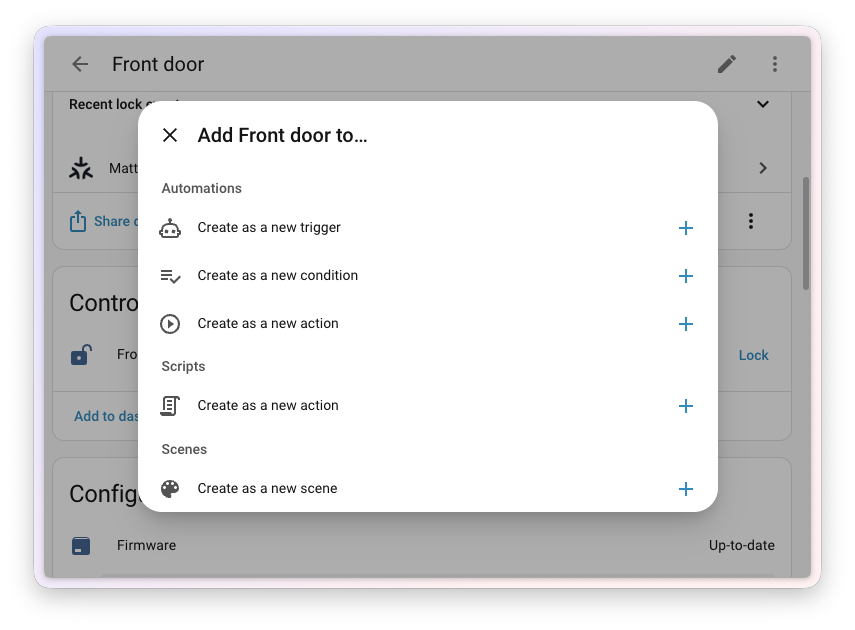
This launch threads a beneficiant set of fast hyperlinks by means of these views so you may soar straight to the associated factor, or create a brand new one with out shedding your house:
- System pages now bundle associated automations, scriptsA script is a saved record of steps that runs if you begin it, for instance, from a dashboard, with Help, or from an automation. Not like an automation, a script has no triggers, so it doesn’t begin by itself. [Learn more], and scenesScenes capture the states you want certain entities to be. For example, a scene can specify that light A should be turned on and light B should be bright red. [Learn more] into a single Related card (instead of three separate ones), and the existing quick links section gains shortcuts to all the other places that reference the device.
- Area pages got the same treatment, with quick links into the tables and dashboards that already filter by that area in a single step.
- From an entity, device, or area, you can now create a new automation or script with that target already wired into a trigger, condition, or action, no copy-pasting entity IDs required. (This piece rides on top of the purpose-specific triggers and conditions Labs preview, so enable it at Settings > System > Labs to see the choice.)
- Label navigation actions now embrace scenes and scripts alongside automations, so a label like “morning routine” surfaces every part tagged with it, not only a subset.
Individually these are small. Collectively they make House Assistant really feel much more related than it already was, with fewer detours between the pages. Thanks, @timmo001!
YAML linting contained in the UI editors
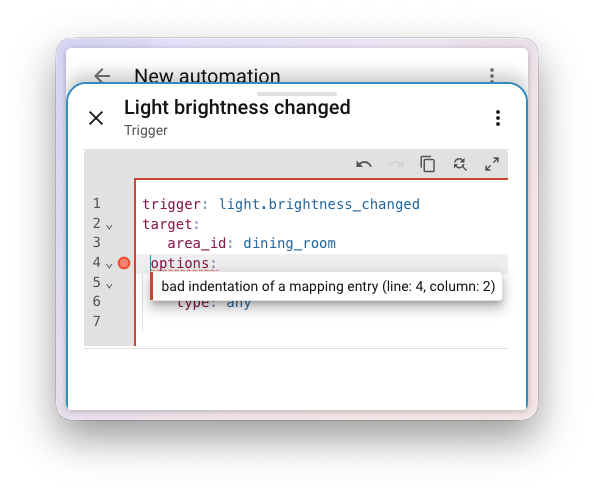
A small quality-of-life enchancment that ought to not go unnoticed. You don’t have to know or use YAML to make use of House Assistant, however if you happen to prefer it, or wish to dive into extra particular use circumstances, we provide the energy to take action.
The YAML code editors all through the UI now present inline linting: lacking colons, unmatched quotes, and sure, that one area too many or too few in your indentation (we all know, we all know 😅), are all highlighted as you sort, proper subsequent to the road that causes them. No extra saving, hitting an obscure error, and scrolling again to seek out the trigger.
Patch releases
We also release patch releases for Home Assistant Core. These patch releases are released on a weekly basis (on Fridays) and contain bug fixes and small improvements.
2026.6.1 – June 5
2026.6.2 – June 9
2026.6.3 – June 12
2026.6.4 – June 19
Need help? Join the community
Home Assistant has a great community of users who are all more than willing to help each other out. So, join us!
Our very active Discord chat server is an excellent place to be, and don’t forget to join our amazing forums.
Discovered a bug or concern? Please report it in our issue tracker to get it mounted! Or verify our assist web page for steerage on extra locations you may go.
Are you extra into e-mail? Join the Open House Basis E-newsletter to get the newest information about options, issues occurring in our group, and different initiatives that help the Open House straight into your inbox.
Backward-incompatible modifications
We do our best to avoid making changes to existing functionality that might unexpectedly impact your Home Assistant installation. Unfortunately, sometimes it is inevitable.
We always make sure to document these changes to make the transition as easy as possible for you. This release has the following backward-incompatible changes:
Purpose-specific triggers (Labs)
The behavior options for the Labs purpose-specific triggers have been renamed to better match what they do: any is now each, and last is now all. The default is now each.
If you have automations that use these triggers from the Labs preview at Settings > System > Labs, open them within the automation editor and re-pick the habits choice. Any YAML you wrote towards the previous keys must be up to date to the brand new names.
(@emontnemery – #172348)
Bluetooth
The default Bluetooth scanning mode has modified to Auto, which dynamically switches between energetic and passive scanning relying on what is occurring. This protects round 95-96% of the battery used for Bluetooth scanning whereas retaining the identical performance for many setups.
For those who run into points after the improve, you may swap your Bluetooth adapter again to Energetic scanning. Go to Settings > Devices & services, open the Bluetooth integration, and choose Configure in your adapter to vary the scanning mode.
Certificates Expiry
The error attribute on the certificates expiry sensor now returns a correct None worth as an alternative of the string "None" when there isn’t a error.
For those who use this attribute in templates, replace your comparisons from == "None" to is none.
(@TomFilsell – #170878) (Certificates Expiry documentation)
ESPHome
The default Bluetooth proxy scanning mode for ESPHome gadgets is now Auto. Units that have been beforehand set to Energetic are mechanically migrated to Auto, whereas gadgets set to Passive hold their setting.
For those who want Energetic scanning for a selected machine, change it again within the machine choices below Settings > Devices & services.
HDMI-CEC
Calling the turn_off motion on HDMI-CEC swap or media participant entities now sends the usual CEC standby command as an alternative of a vendor-specific power-off command. This works extra reliably throughout gadgets from completely different producers.
For those who relied on the earlier habits, you may ship the unique command utilizing the hdmi_cec.send_command motion with keypress 0x44 adopted by 0x6c.
(@pattyland – #170206) (HDMI-CEC documentation)
IronOS
The uptime sensor for IronOS soldering irons has modified from a length sensor (reporting seconds) to a timestamp sensor that stories when the machine was began.
Replace any automations or dashboards that learn this sensor to work with the brand new timestamp format.
ONVIF
If you name the onvif.ptz motion with continuous_duration: 0, the mixing now not sends a Cease command after the ContinuousMove. This allows you to begin a steady motion and cease it later with a separate name.
In case your automations depend on the digicam stopping mechanically, set continuous_duration to the specified length in seconds.
Shelly
Shelly gadgets used as Bluetooth scanners now help the brand new Auto scanning mode. Current gadgets set to Energetic are mechanically migrated to Auto for higher battery and efficiency.
You may change the scanning mode again within the machine choices below Settings > Devices & services.
SmartThings
The supply attribute on SmartThings media gamers is now normalized to plain House Assistant values. For instance, D.IN is now reported as digital_input and BT as bluetooth.
For those who use the supply attribute in automations, dashboards, or templates, replace them to match the brand new values.
(@felipecrs – #160034) (SmartThings documentation)
Tuya
The unit of measurement supplied by the Tuya API now takes priority over the default unit assigned by House Assistant. This makes the reported worth match what the Tuya app reveals.
In case your machine stories an invalid or sudden unit, please submit a bug report with the machine particulars and the unit it stories and regulate it accordingly.
If you’re a customized integration developer and wish to study modifications and new options out there on your integration: Make sure to comply with our developer blog. The next modifications are probably the most notable for this launch:
All modifications
After all, there’s much more on this launch. You’ll find a listing of all modifications made right here: Full changelog for House Assistant Core 2026.6.