

Editor’s notice: On September 22, 2025, LightingEurope, the Brussels-based commerce affiliation for the European lighting trade, printed an up to date assertion on RoHS lamp exemptions. The doc was printed by the LightingEurope Secretariat, with the Government Director Elena Scaloni and Coverage Director Antoine Hattemer listed as contact factors. LED Skilled reproduces the next statements within the unique part construction. Solely minor editorial changes have been made to suit the context.
essential message
This doc primarily informs market gamers in regards to the phase-out of mercury- and lead-containing lamps within the EU, as decided by the RoHS Directive. [1] Take into account merchandise positioned on the EU market. It clarifies which RoHS exemptions have expired and which LightingEurope has or will renew, and highlights that present exemptions stay in impact through the renewal course of. RoHS compliant merchandise are additionally permitted by EU Mercury rules [2]That is an implementation of the UN Minamata Conference, which addresses extra restrictions on the manufacture, import and export of sure merchandise by the EU.
Lamp-specific RoHS exemption
LightingEurope had already utilized for brand spanking new validity durations for the next RoHS exemptions forward of 2025:
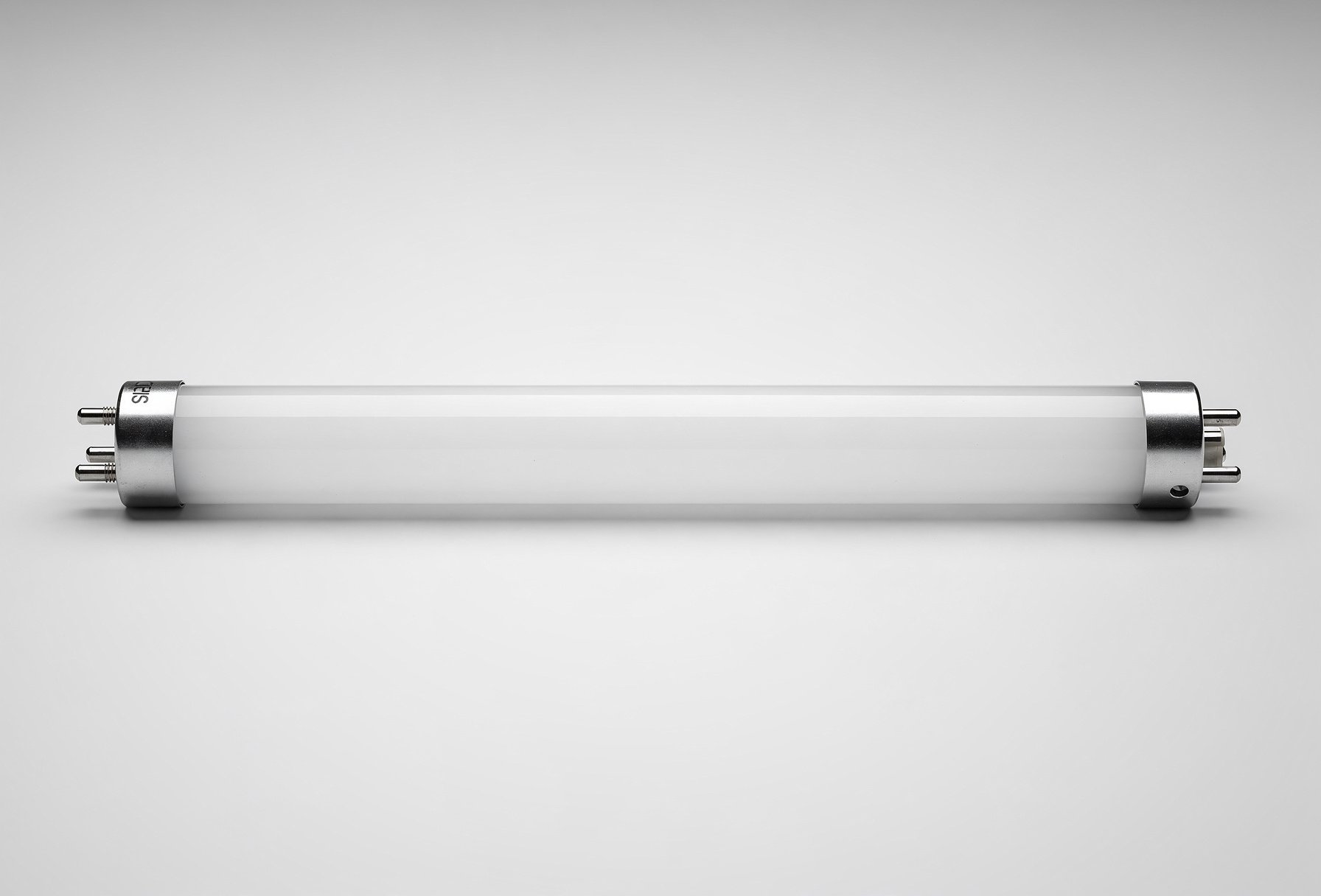
- RoHS Exemption 5(b) “Lead (not deliberately added) in soda-lime glass utilized in fluorescent glass tubes doesn’t exceed 0.2% by weight.”
- RoHS Exemption 18b/34 Annex IV Lead-activated phosphor lamps for sunscreen and medical use.
- RoHS Exemption 4(f)-I “Mercury in different discharge lamps for particular functions not particularly talked about” – This contains (ultra-)high-pressure mercury lamps utilized in projectors with an influence output of 200 m.
- RoHS Exemption 2(b)(4)-I “Mercury in different fluorescent lamps doesn’t exceed 15mg per lamp.” [Hg]. “Lamps for different basic lighting and particular functions” – This contains lamps for curing, polymerization, pest management, explosive atmospheres, colour matching, sure medical makes use of, and many others.
LightingEurope utilized for brand spanking new validity durations for the next RoHS exemptions in August 2025 to request an extension of those exemptions past February 24, 2027. LightingEurope has requested a most five-year validity interval for all exemptions listed under, besides exemption 4(c)-I-III, which requires a three-year renewal interval.
- RoHS Exemption 1(f)-I “For lamps designed to emit gentle within the ultraviolet spectrum, mercury in compact fluorescent lamps doesn’t exceed 5 mg (per burner)” (presently legitimate till February 24, 2027).
- RoHS Exemption 2(b)(4)-II-III “Different fluorescent lamps with mercury content material per lamp of: II – lamps emitting primarily within the ultraviolet spectrum: 15 mg, III – emergency lamps: 15 mg” (presently legitimate till February 24, 2027).
- RoHS exemption 4a-I “Mercury in low-pressure non-phosphor-coated discharge lamps, the appliance of which requires the predominant vary of the spectral output of the lamp to be throughout the ultraviolet spectrum: 15 mg” (presently legitimate till February 24, 2027).
- RoHS exemption 4(c)-I-III Mercury content material (per burner) in different HPS lamps for basic lighting functions: I – P ≤ 155 W: 20mg; II – 155 W 405 W: 25mg’ (presently legitimate till February 24, 2027).
- RoHS Exemption 4(e) “Mercury in Metallic Halide Lamps (MH)” (presently legitimate till February 24, 2027).
- RoHS Exemption 4(f)-II “Mercury in Excessive Strain Mercury Vapor Lamps Utilized in Projectors Requiring Output > 2000 Lumens ANSI” (presently legitimate by way of February 24, 2027).
- RoHS Exemption 4(f)-III “Mercury in Excessive Strain Sodium Vapor Lamps Utilized in Horticultural Lighting” (presently legitimate till February 24, 2027).
- RoHS Exemption 4(f)-IV “Mercury in lamps that emit gentle within the ultraviolet spectrum” (presently legitimate till February 24, 2027).
please notice: The above renewal request stays legitimate after the acknowledged expiration date till the European Fee takes a call and decides on a brand new renewal or phase-out with a transition interval.
Renewal requests for exemptions which are underneath evaluate by the EU Fee, however whose new validity interval has not but been decided by a brand new Delegated Directive, and whose present expiration date is prior to now, will usually not have to submit a brand new renewal request, as they may stay legitimate till the Fee decides on the renewal request (Instance 5(b)). Submissions could also be required in distinctive instances, equivalent to when new proof impacts the scope of the advice. [3]
LightingEurope has not utilized for, and doesn’t intend to use for, the next exemptions: Which means that these exemptions will expire (d) with none extension interval after the date indicated.
- RoHS Exemption 1(f)-II “Mercury content material in compact fluorescent lamps (per burner): For particular purposes: 5 mg” – Expired on February 24, 2025.
- RoHS exemption (2)(b)(3) “Nonlinear tri-band fluorescent lamps with tube diameter > 17 mm (e.g. T9): 15 mg” – Expired on February 24, 2025.
- RoHS exemption 3(ac) “Mercury in Particular Goal CCFLs and EEFLs Utilized in EEE Positioned on the Market Earlier than February 24, 2022 – All Lengths” – expired on February 24, 2025.
- RoHS Exemption 4(b) “Mercury content material in HPS lamps for basic lighting functions not exceeding 16 mg (per burner) for lamps with improved colour rendering index Ra > 80: P ≤ 105 W” – expired on February 24, 2027.
please notice: To make sure the continued availability of important lighting parts, LightingEurope helps the Umbrella Challenge Group’s efforts to safe an extension of key RoHS exemptions underneath Pack 22, together with important purposes coated by exemptions 7(a), 7(c) and 6. Moreover, LightingEurope is working with the UK’s Lighting Business Affiliation (LIA), which has additionally submitted 5 RoHS exemption purposes to the UK DEFRA authorities for extension. 2025 (much like EU exceptions 1(f)-I, 2(b)(4)-II, 4a-I, 4(f)-II, and 4(f)-IV).
Particular conditions for spare elements
Non-integral lamps are particularly designed as replaceable spare elements for electrical and digital gear (EEE), equivalent to luminaires, in accordance with Articles 3-27 and 4-4f of the RoHS Directive. As spare elements, they play an essential function in sustaining the performance of EEE luminaires, as they’ve a finite lifespan and have to be changed periodically in the event that they stop to operate. By enabling useful restoration, these lamps lengthen the general lifespan of EEE, enhance sturdiness, and cut back pointless waste era.
LightingEurope acknowledges that it’s tough to obviously classify sure lamps into classes outlined by RoHS laws. Nevertheless, it’s important for lamp producers to make sure authorized certainty about the potential for placing their merchandise available on the market, whatever the deliberate use. It is because producers can’t management using lamps in merchandise that fall into different classes, whether or not inside or outdoors the RoHS scope. In apply, most lamps are put in in buildings or outdoor for lighting purposes (Class 5), however some are utilized in different varieties of gear that fall underneath all different RoHS classes.
Precautions
[1] of EU RoHS Directive (2011/65/EU) regulates the putting on the EU market {of electrical} and digital gear (EEE) containing sure hazardous substances. The regulation prohibits using mercury in lamps until used within the expressly excluded purposes listed in Annex III and Annex IV of the Directive. These exemptions are granted by the European Fee for a restricted time period. Nevertheless, these exemptions may be renewed periodically by submitting a request to resume the exemption interval, so the acknowledged expiration date is usually not thought of a ultimate phase-out date. Throughout the analysis interval for such renewal requests, present exemptions will stay in impact even after the acknowledged expiration date. If the renewal request just isn’t granted, the European Fee will nonetheless have to grant a transition interval of 12 to 18 months to offer the market time for a ultimate phase-out.
[2] The EU Mercury Regulation (EU 2017/857) implements the UN Minamata Conference and restricts the manufacture, import and export of sure mercury-added merchandise, together with sure lamps. These are listed in Appendix II of the Rules. This record was prolonged by the European Fee in October 2023 (EU 2023/2049) and new extra restrictions are proposed by coverage makers. in early 2024. These agreed limits don’t have an effect on lamps which are nonetheless permitted underneath the RoHS Directive. Please consult with LightingEurope Press Release on EU Mercury Regulation 2024 For extra info.
[3] For an summary of the validity standing of all RoHS exemptions, please go to the next web site: Effectiveness and rolling plan This desk is often up to date by the European Fee as a documentation instrument.
contact
For extra info on this subject, LightingEurope can contact Secretary Normal Elena Scaroni (elena.scaroni@lightingeurope.org) or Coverage Director Antoine Hattemer (antoine.hattemer@lightingeurope.org).
sauce: LightingEurope statement on RoHS lamp exemption (updated)LightingEurope, Brussels, printed September 22, 2025 (PDF). Recreated by LED specialists with editorial tweaks and the assistance of AI.